

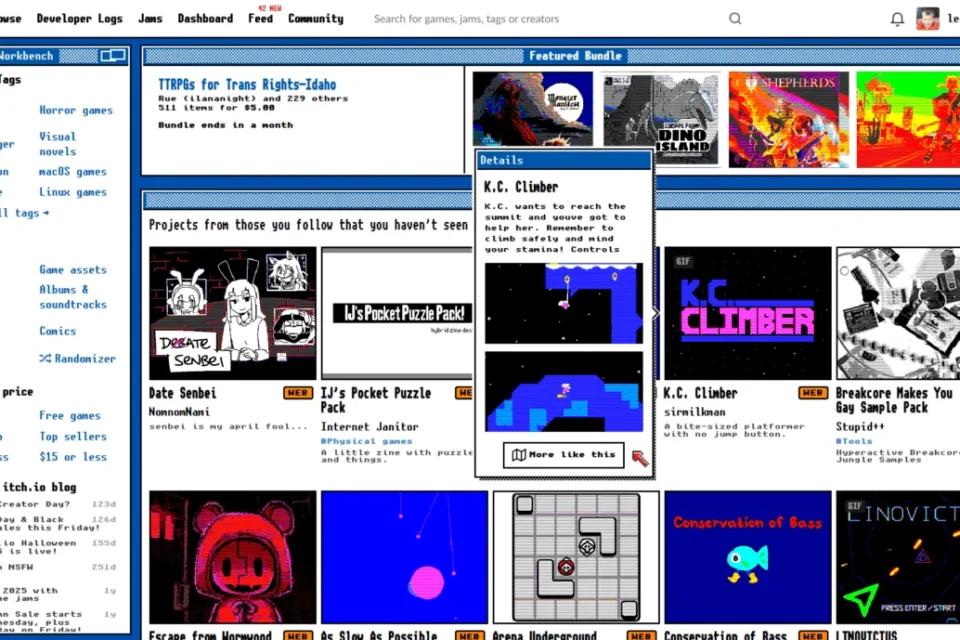
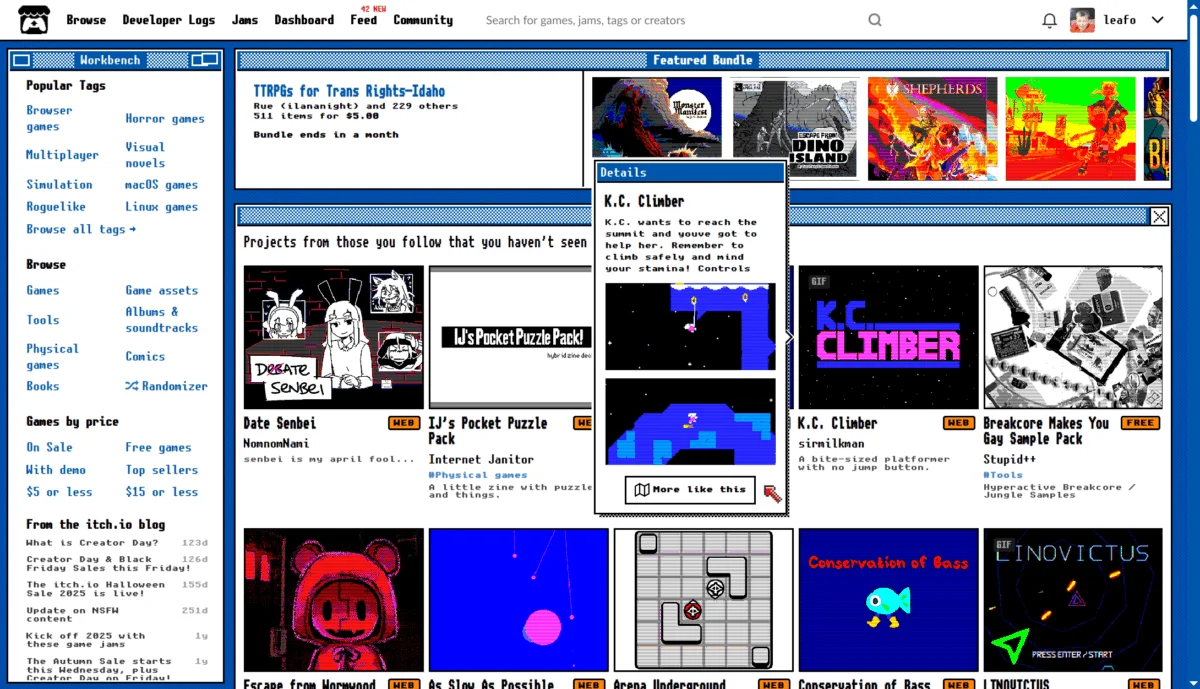
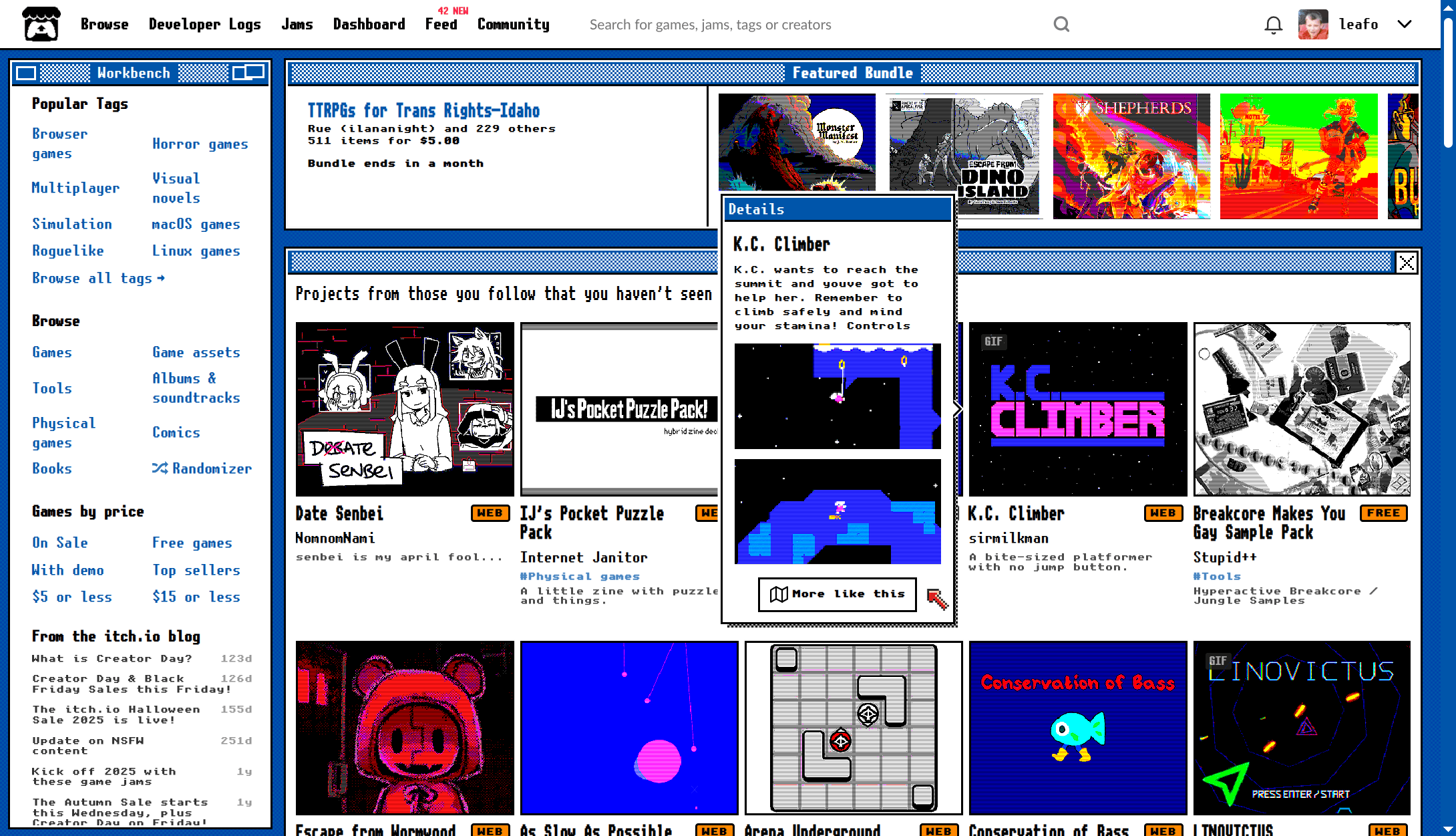
For many within the independent gaming community, the itch.io homepage is a familiar, sleek gateway to thousands of experimental projects, game jams, and digital treasures. However, for a brief, disorienting period around April 1st, that familiarity was shattered. In a bold, polarizing, and technically impressive display of web-based nostalgia, the itch.io development team transformed their entire platform interface into a monochromatic, ASCII-art-inspired aesthetic known as "Ameyega Mode."
While the prank was initially intended as a lighthearted tribute to the early days of computing, it quickly became a flashpoint for debate regarding web accessibility, user interface (UI) design, and the boundaries of platform-wide creative expression.
The Genesis of Ameyega: A Retro-Futuristic Homepage
The "Ameyega Mode" update fundamentally altered the CSS and visual rendering of the itch.io landing page. By utilizing the unscii font library—a collection of high-readability bitmap fonts designed for pixel-perfect clarity in low-resolution environments—the developers effectively stripped away the modern, responsive design that users had come to expect.
In its place stood a rigid, grid-based aesthetic that felt more at home on a 1980s Commodore 64 or an early BBS (Bulletin Board System) than a modern indie game storefront. The update arrived late on April 1st, a fact acknowledged by the developers, who opted to keep the theme active longer than the traditional 24-hour window to ensure the team’s effort was fully realized and experienced by a global audience.
Chronology: From Launch to Legacy
The transition into Ameyega Mode was not a gradual rollout; it was an abrupt, site-wide aesthetic shift that occurred without prior notice.
- The Launch: On April 1st, users visiting the itch.io homepage were greeted by a jarring, high-contrast, text-heavy layout. The immediate reaction was one of confusion, with many users initially suspecting a browser rendering error or a compromised cache.
- The Peak of Interaction: As the novelty set in, the itch.io blog post announcing the mode became a hive of activity. Within hours, the comment section exploded, reflecting a sharp divide in user sentiment.
- The Technical Friction: As the hours stretched into days, technical issues began to surface. Users reported that the experimental interface conflicted with existing browser preferences, specifically the "Dark Mode" setting, leading to rendering bugs that rendered the site difficult to navigate.
- The Decommissioning: By the time the team formally announced the conclusion of the event, they provided a specialized URL—
https://itch.io/?ameyega—allowing users to toggle the view on a voluntary basis, effectively shifting the experiment from a mandatory site-wide skin to an "opt-in" nostalgic feature.
User Feedback: A House Divided
The community response to Ameyega Mode was arguably as significant as the design itself. The comments section serves as a fascinating case study in the tension between nostalgia-driven aesthetics and modern functional requirements.
The Proponents of Retro-Charm
For a vocal segment of the user base, the experiment was a triumph of creativity. Users praised the "charm" and "nostalgia" of the design, with many expressing a genuine desire to keep the theme as a permanent, optional toggle. One user remarked that the ASCII layout was "easier to read" and provided a much-needed reprieve from the "cluttered" nature of modern web design.
The Accessibility Crisis
However, the design choices did not come without consequence. A significant portion of the feedback highlighted the exclusionary nature of the experiment. Users with visual impairments reported that the high-contrast, pixelated text was not only difficult to read but entirely inaccessible through certain screen readers.
"I’m disabled and I CAN’T WATCH THIS," wrote one user, summarizing the frustration of those who rely on consistent UI patterns to navigate the web. Others noted that the lack of navigation clarity made it nearly impossible to access their own game feeds or account settings, leading to legitimate concerns about the platform’s usability during the event.
Official Response and Technical Implications
The itch.io team remained largely engaged throughout the duration of the event, observing the feedback and acknowledging the technical hurdles that arose. While the team did not issue a formal "apology" in the traditional sense, their responsiveness to the community’s technical grievances was swift.
When users reported that the "Ameyega" override was breaking the platform’s native Dark Mode, developers implemented fixes within hours. This highlighted an important reality of modern web development: even a "fun" prank requires the same level of rigorous maintenance as a core feature. The ability to revert to the standard layout or maintain specific user settings became the primary focus of the developers during the final stages of the experiment.
The Broader Implications for Platform Design
The Ameyega experiment raises critical questions about the evolution of indie game platforms. As these platforms grow, they become more than just storefronts; they are essential social hubs and professional tools for developers.
The "Personalization" Expectation
The success of the "opt-in" URL suggests that the itch.io community is hungry for customization. While the ASCII mode was a source of frustration for many when forced upon them, it was widely praised when offered as a choice. This implies that the future of community-driven platforms may lie in "modular" design, where users have the power to define their own browsing experience.
The Cost of Innovation
There is an inherent risk in changing the interface of a platform that millions of users rely on for their livelihoods. When a site changes its layout, it can inadvertently break workflows—such as the ability to post, review, or share links. The criticism regarding the site’s functionality serves as a reminder that for many developers, itch.io is not just a playground; it is a vital part of their professional identity.
Conclusion: A Lesson in Balance
The "Ameyega Mode" event was a microcosm of the current state of the web: a tug-of-war between the desire for "soulful," artistic expression and the non-negotiable requirement for universal accessibility.
While the prank succeeded in generating buzz and celebrating the roots of computer culture, it also served as a sobering reminder of the responsibility platform holders have toward their users. As the digital landscape continues to evolve, the challenge for platforms like itch.io will be to maintain their creative spirit without sacrificing the accessibility and functionality that allow their diverse community to thrive.
The experiment has officially ended, but the conversation it ignited—about themes, user autonomy, and the necessity of inclusive design—is only beginning. Whether or not we see the return of Ameyega as an official, optional theme remains to be seen, but the mark it left on the itch.io community is as indelible as the ASCII characters that defined it.
Summary of Data Points
- Event Duration: Extended beyond the standard 24-hour April 1st window.
- Primary Font: unscii, a tribute to classic bitmap typography.
- Community Sentiment: Highly polarized; roughly 60% of vocal feedback focused on accessibility issues, while 40% championed the aesthetic value.
- Technical Outcome: Successfully forced a debate on the necessity of "Dark Mode" and high-contrast accessibility standards in experimental web design.
